
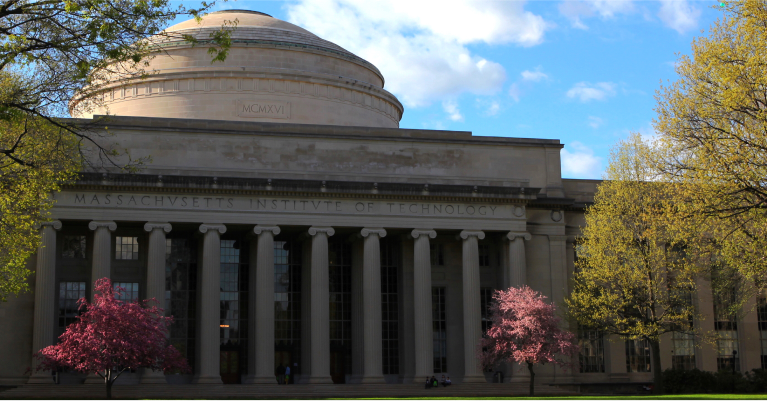
PROFESSIONAL CERTIFICATE PROGRAM IN
Industry 4.0
Leverage IoT to evolve production processes and provide smart solutions
Program Overview
This course prepares professionals to lead the future of smart manufacturing, IoT-enabled systems, and digital industrial transformation. You will explore how technologies like IoT, AI, machine intelligence, industrial data, and platform design reshape production, efficiency, and decision-making.
Over nine to twelve months, MIT instructors and industry experts guide you through live online webinars, practical assignments, and real-world applications designed to help you optimize operations, adopt emerging technologies, and build agile, resilient Industry 4.0 strategies.
Learning Outcomes
Understand the evolution of manufacturing from traditional models to mass customization.
Identify new market and product opportunities using platform strategies.
Apply modern methods for designing product families and scalable product platforms.
Use production data to uncover system behavior, key variables, and optimization levers.
Examine machine innovation and machine vision through practical examples like the FrED device.
Measure technological progress using Figures of Merit to guide innovation goals.
Apply IoT+ concepts to build smart, connected products and industrial systems.
Use AI to drive automation, empower teams, and lead agile digital transformation initiatives.
Learning Journey
Course 1: Management of Technology: Roadmapping and Development
Understand the fundamentals of technology
Explore the evolution of technology
Measure and assess technological progress
Analyze patents and intellectual property
Examine technology diffusion and disruption
Apply roadmapping through the automobile case study
Build and interpret technology roadmaps
Evaluate technological strategy and competition
Explore advanced concepts through the spaceships case study
Designing Product Families: From Strategy to Implementation
Understanding fundamental platforming concepts
Exploring platform benefits and strategy
Designing product and platform architecture
Conducting platform analysis and evaluation
Applying platform architecting principles
Planning platform development processes
Managing platforms and governance
Analyzing two-sided markets and industry platforms
Course 3: Smart Manufacturing: Moving From Static to Dynamic Manufacturing Operations
Introduction to Smart Manufacturing and FrED
Analyzing manufacturing data through visualization techniques
Using modeling techniques to interpret and understand production data
Applying sensing in manufacturing systems
Understanding the control of manufacturing processes
Understanding machine vision
Applications of machine vision
Gaining knowledge of model fitting and sensitivity analysis
Statistical Process Control
Advanced Data Analysis
Course 4: Industrial Internet of Things: From Theory to Applications
Understanding introductions, market needs, and industry trends in IoT
Learning the fundamentals of sensing and signal processing (Part I)
Exploring advanced sensing techniques and data acquisition (Part II)
Understanding computing and embedded systems in IoT
Exploring communication systems and networking in IoT
Applying data analytics and machine learning in IoT systems
Designing integrated IoT systems and real-world applications
Building and implementing end-to-end IoT solutions
Course 5: Applied AI for Digital Transformation
Understand generative and agentic AI and their real-world applications
Design AI-driven strategies using cloud, APIs, and enterprise tools
Build hands-on skills in multi-format AI content creation
Manage AI risks, including ethics, compliance, and misinformation
Connect AI capabilities to business outcomes without technical expertise
Navigate AI ethics and regulatory challenges effectively
Impact Project
The program includes an Impact Project that enables you to translate your learning to real-world situations. This experience challenges you to apply insights from each module to a real business problem, develop a practical solution, and present your recommendations to experts. The project encourages teamwork, communication, research, and problem-solving among peers.
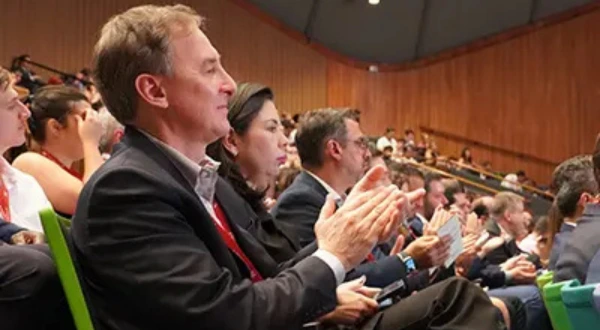
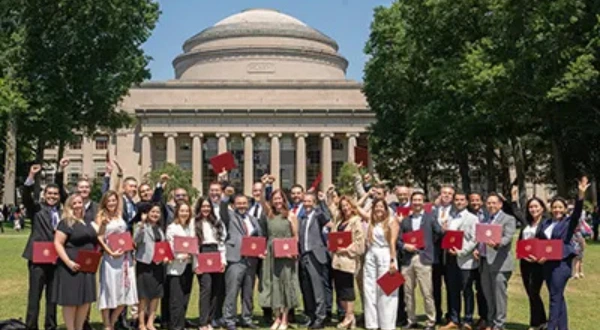
Join the Global Cohort at the Certificate Award Ceremony

Why Enroll in This Course?

Join the MIT Community
Build global connections with peers driving industrial innovation.

Create a High-Impact Project
Design a practical Industry 4.0 solution using course tools and methodologies.

Learn Live From MIT
Engage in interactive webinars led by MIT instructors and experts.

Earn Your MIT Credential On Campus
Receive your certificate at an in-person ceremony in Cambridge.
Who Is It For?
This certificate course is ideal for:
Plant and Product Managers seeking to improve efficiency and adopt smart technologies.
Product strategists, platform architects, R&D, and systems engineers in industry and government.
Design and manufacturing engineers using data modeling and advanced manufacturing tools.
Data scientists applying analytics to smart manufacturing.
Technology leaders seeking best practices in generative AI.
Functional managers exploring emerging industrial technologies.
Senior managers and mid-career executives interested in AI-driven industrial transformation.
Innovation, product, sales, marketing, and customer experience professionals adopting generative AI.
Investors identifying opportunities in Industry 4.0 and advanced manufacturing.
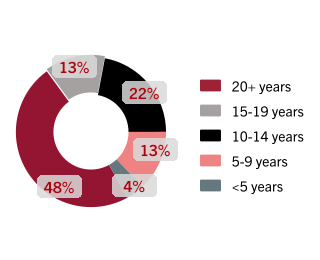
Past Participants Profile
Average years of work experience
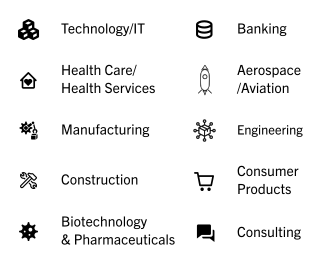
Top industries
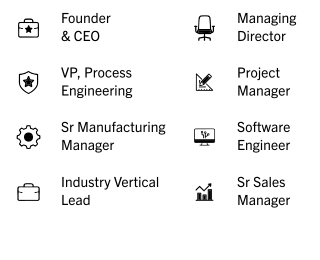
Top functions
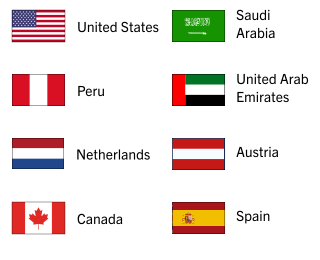
Top countries
Hear From Our Participants
Instructors

Dr. Abel Sánchez
Research Scientist, MIT

Dr. Brian W. Anthony
Director of the MIT Master of Engineering in Advanced Manufacturing and Design. Associate Director, MIT.nano
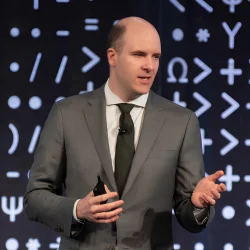
Dr. Bruce Cameron
Director, System Architecture Group at MIT

Prof. John R. Williams
Professor, MIT Department of Civil and Environmental Engineering; Affiliated Faculty, MIT Center for Computational Science and Engineering.

Prof. Olivier De Weck
Professor of Aeronautics and Astronautics and Engineering Systems, MIT

Prof. Timothy W. Simpson
Professor of Mechanical Engineering and Industrial Engineering
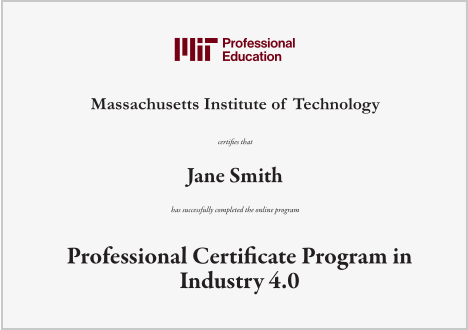
Certificate
Upon successful completion of the course, participants receive an MIT Professional Education Certificate of Completion and Continuing Education Units (CEUs) recognizing their commitment to advanced professional learning
To earn CEUs, participants must complete the required MIT CEU confirmation form provided at the end of the course. CEUs are awarded based on total learning hours, with one CEU representing ten hours of participation in a non-credit professional development course.
Note: CEUs may or may not apply toward professional certifications, licensing requirements, or mandated training hours. Participants should verify eligibility directly with their licensing authority or training department.
Benefits of Joining the Professional Alumni Community
Digital Professional Certificate and MIT CEUs*.
15% benefit for online programs and short-duration, in-person programs offered by MIT Professional Education.
20% benefit for all DPP programs
Invitation to a Certificate Award Ceremony at MIT’s campus in Cambridge, Massachusetts, where participants will receive a physical certificate.
Access to the virtual campus for 2 years after program completion.
Exclusive announcements of new courses, programs, and events.
Exclusive access to the MIT Professional Education Alumni LinkedIn group, connecting you with a global network of fellow MIT Professional Education alumni.
Frequently Asked Questions
What’s included in the Certificate Award Ceremony on the MIT campus?
The Certificate Award Ceremony at MIT Professional Education brings together accomplished participants from all Professional Certificate Programs to celebrate their hard-earned achievements. Attendees will enjoy speeches from MIT faculty, celebratory networking opportunities, and the prestigious awarding of certificates in recognition of their dedication and skill development. For those unable to attend in person, a virtual ceremony is also available on a separate date. To learn more, you can download the Certificate Award Ceremony Brochure here.
What is the methology in Professional Certificate Programs?
We believe in practical applications and implementing what participants learn. That is why at MIT Professional Education, we will give participants the tools to make their experience as fulfilling as possible. Participants will have the chance to participate in an engaging and collaborative classroom environment with discussion forums and group activities. The participants of our programs can interact directly with peers and program facilitators.
What does the impact project entail?
The Impact Project is a collaborative project that spans the entire duration of the certificate program. The aim of the project is to identify a problem, propose a solution, and employ the tools acquired through each course to demonstrate actionable methods to arrive at the end goal. In this way, this project ensures that participants have the opportunity to reflect on the covered topics, apply and link new knowledge from each program within the Professional Certificate Program.
What’s the difference between Instructor-led webinars and Learning Facilitator’s office hours?
Faculty-led webinars and Learning Facilitator's office hours serve different purposes within the program. Faculty-led webinars are conducted twice per course, at the beginning and end, where MIT faculty introduce and conclude the topics covered. On the other hand, Learning Facilitator's office hours, led by subject experts, are held weekly to review and delve into each weekly module. These sessions aim to assist participants in assimilating and deepening their understanding of the course material.
What is MIT Professional Education and its relationship with Global Alumni?
MIT Professional Education, directed by the School of Engineering at the Massachusetts Institute of Technology (MIT), offers short online programs for professionals worldwide through Professional Certificates. These programs, guided by MIT faculty, aim to provide high-quality online learning services. To ensure program accessibility in different languages, MIT Professional Education collaborates with Global Alumni, a European-American EdTech specializing in online learning services from renowned universities worldwide. For more information about Global Alumni, visit this link: Global Alumni. You can also find official communications about our relationship with Global Alumni in the following links: MIT Professional Education - Who We Work With.
Are any taxes applicable to this program?
Applicable taxes will be calculated and added at checkout in accordance with country/state regulations.
Connect with a Program Advisor for a 1:1 Session
Didn't find what you were looking for? Schedule a call with one of our Program Advisors or call us at +1 315 557 7981.
Register now and boost your professional trajectory.
Starts on