

Chief Technology Officer Program
- Two Residential Weeks at the MIT Campus
- Two live sessions per course with MIT instructors
- Impact project on a real-world business challenge
- MIT Professional Education alumni access
Program Overview
You will learn to:
Translate emerging technologies and AI capabilities into strategic advantage and enterprise transformation
Evaluate and implement AI and advanced analytics initiatives with measurable outcomes and performance tracking
Design and align R&D strategies with business goals through structured technology roadmaps
Apply system dynamics and modeling to guide innovation, decision making, and complex technological change
Build data-driven, globally aware organizations that effectively deploy machine learning and autonomous AI systems at scale
The Program Includes Instructor-Led Sessions on AI and Innovation
During the two residential weeks, participants will delve into the transformative impact of AI, innovation, and emerging technologies. These sessions will cover:
The role of generative and agentic AI in shaping modern organizations
How machine learning and autonomous AI systems are being applied across industries
The impact of these technologies on fields such as design, manufacturing, data analysis, and enterprise decision making
Practical insights and leadership tools to support informed, strategic decisions in an increasingly AI-driven and automated landscape
*Instructor availability and topics are subject to confirmation.
Driving Innovation Through AI and Strategic Execution

Technological Foresight
Assess how technologies evolve, identify key inflection points, and translate emerging capabilities into structured roadmaps with clear performance targets.

AI in the Enterprise
Apply generative AI, machine learning, and multi-agent systems to real business contexts, with a focus on prioritizing use cases, ensuring governance, and enabling scalable implementation.

R&D and Portfolio Strategy
Design and manage technology portfolios using multiple roadmaps, align R&D investments with strategic priorities, and assess trade-offs across risk, capability maturity, and long-term value.

Data-Driven Leadership
Use data, analytics, and system modeling to interpret complex environments, guide decision making under uncertainty, and shape organization-wide strategy.
Learning Journey
Innovative Leadership: Cultivating Impactful Culture
Why Leadership Matters in the Innovation Process
My Leadership Skills
Creating and Communicating a Shared Vision
Analysis of a Real Project
Management of Technology: Roadmapping and Development
What is Technology?
The History of Human Beings and Technology
Determine the Scope of Technological Advancement
Patents and Technology
Technological Diffusion and Disruption
Roadmapping Case Study: The Automobile
What is Technology Roadmapping?
Technological Strategy and Competition
Roadmapping Case Study: The Aircraft
Management of Technology: Strategy and Portfolio Analysis
Systems Modeling and Technology Sensitivity Analysis
Technology Infusion Analysis and Case Studies
Roadmapping Case Study: The Deep Space Network
Technology Scouting, Knowledge Management, and Technology Transfer
Roadmapping Case Study: Advancements in DNA Research
R&D Project Definition, Portfolio Management, Tech Evaluation and Finance
Innovation of Intelligence Technologies
Impact of Technological Innovation on Industrial Ecosystems
The Future of Technology
Applied AI for Digital Transformation
Understanding AI and the Business Impact
How Generative AI Works
Prompt Engineering
AI Across the Organization
Ethics, Governance, and Responsible AI
Building an AI-Ready Organization
The AI-Enabled Economy: Workforce, Disruption, and Opportunity
Creating an AI Strategy
Applied Agentic AI for Organizational Transformation
Foundations of Generative and Agentic AI
The Rise of Agentic AI and Emerging AI Platforms
Connecting Agents to Digital Ecosystems
Cybersecurity: Classic Scenarios, Agent Risks, Disinformation, and Systemic Impact
AI Agents by Business Function
The Last Mile - From Pilot to Practice
Governance, Compliance, and Agent Testing
Ethics and Capstone
*The modules and curriculum are subject to change.
Impact Project
The impact project is a transversal project that will be carried out throughout the blended professional certificate. Participants will work in teams on a series of assignments that will culminate in a final presentation on the MIT campus.
Participants will be given a choice of two tracks for this project:
Work on a project with an industry challenge provided by the learning facilitator
Work on a project (industry challenge) chosen by the group and approved by the learning facilitator
Learning Objectives:
Develop individual reflections on the theoretical and practical concepts covered throughout the certificate courses
Apply the knowledge acquired in the courses to real-life industry cases
Integrate and connect ideas from each course, resulting in transversal knowledge acquisition
Build a community of practice in small groups, proposing concrete solutions to complex industry problems
Toward the end of each course, participants will also attend a 60-minute session to prepare for the Impact Project deliverable. These sessions are hosted by the program coordinator and the course’s learning facilitator.
Program Experience

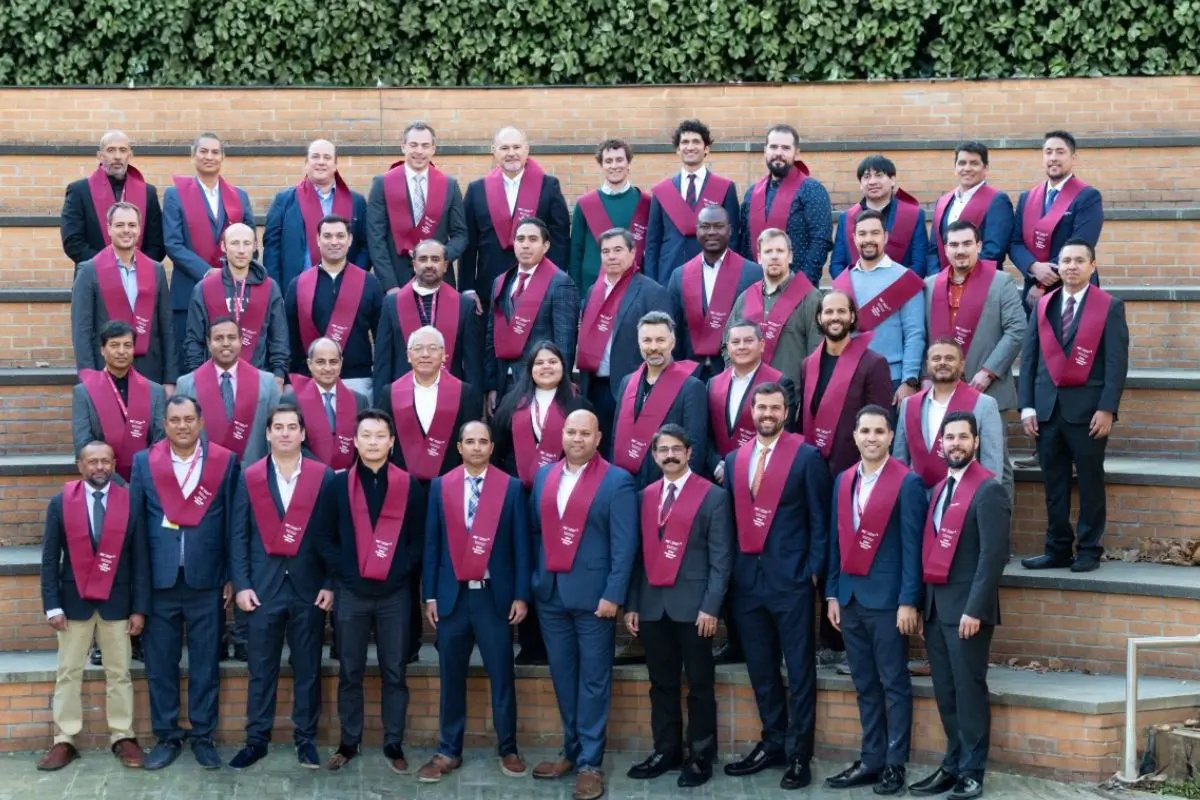
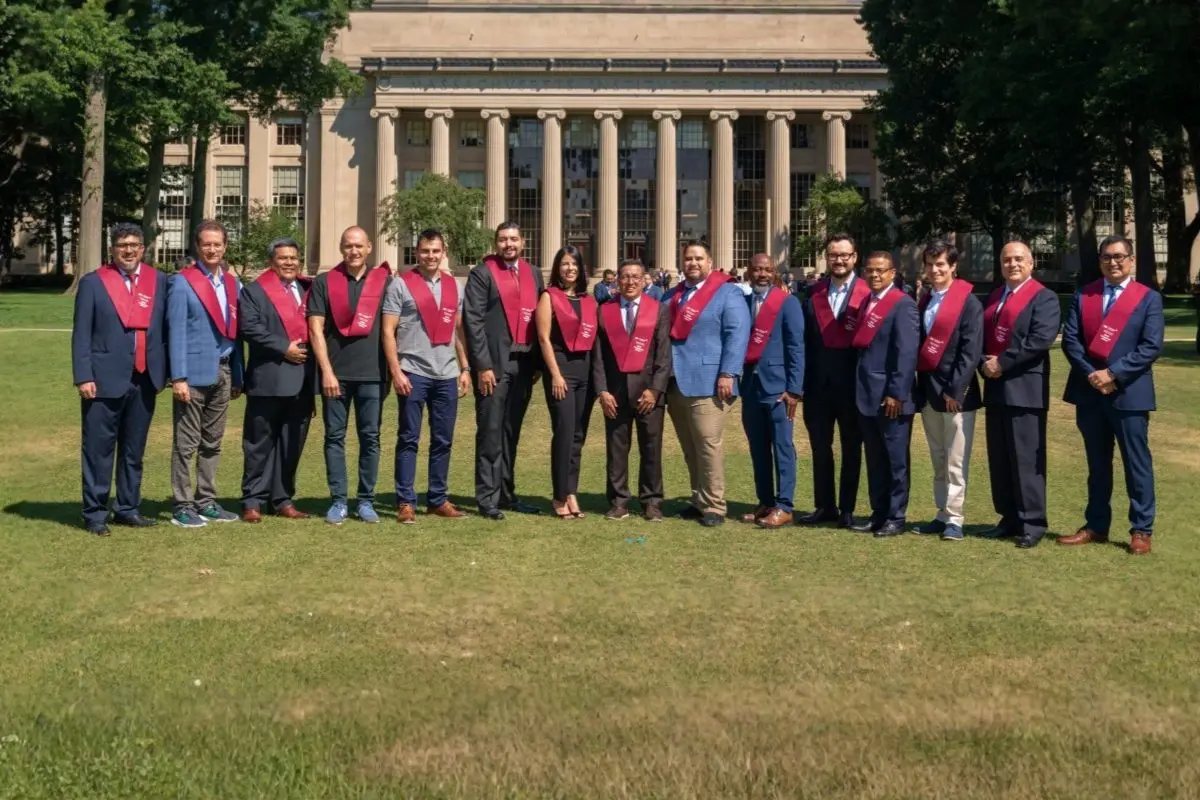
Participate in two residential weeks on the MIT campus with masterclasses led by MIT instructors, guest speaker sessions, and collaborative learning alongside a global cohort.

Broaden your professional network by joining MIT Professional Education's alumni community and unlocking exclusive alumni benefits.

Engage in two live online sessions with MIT instructors per course and receive real-time feedback on your progress, complemented by weekly live office hours with learning facilitators.

Develop your Impact Project by collaboratively designing a business solution that addresses a real-world challenge, applying the tools and strategies gained throughout the program.

The program includes one CXO Spotlight Session during the first Residential Week. Participants may submit their project for consideration, and selected participants will have the opportunity to deliver an optional five-minute pitch-style presentation in person.

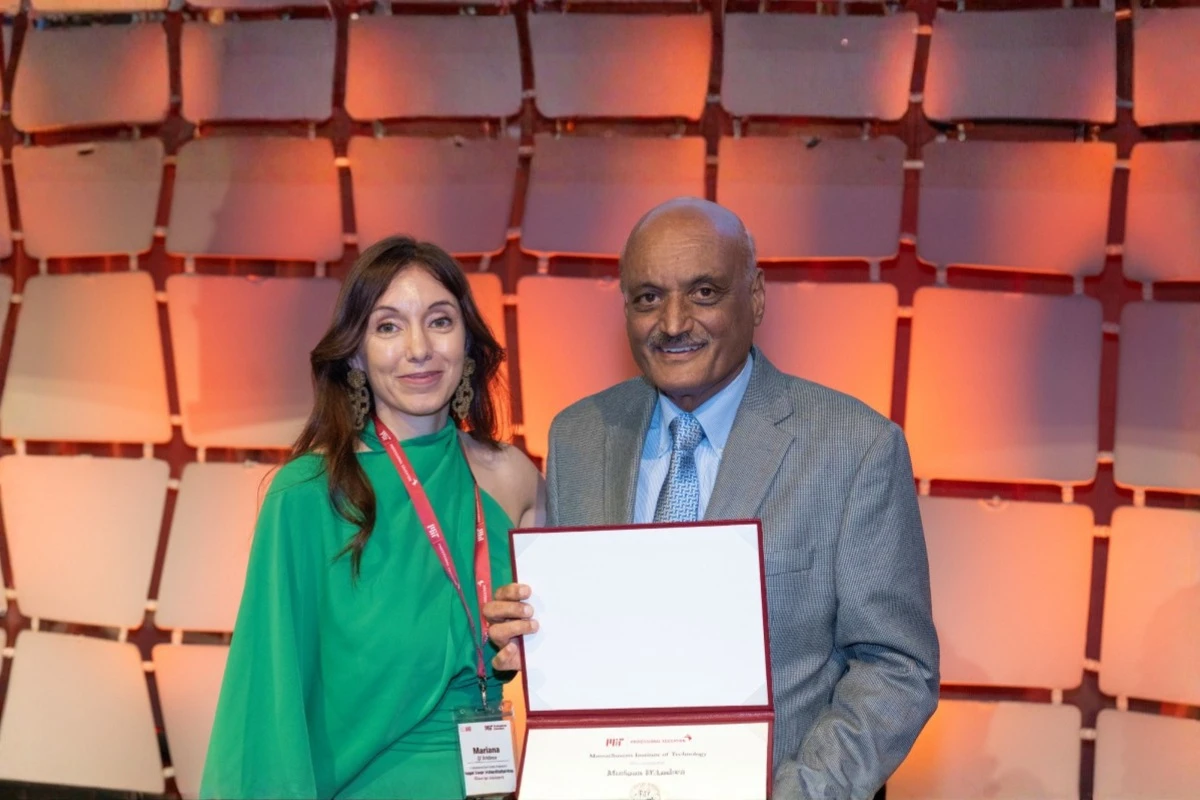
Attend the Certificate Award Ceremony during the second residential week and receive your certificate in person from MIT instructors.

Participate in individual live-online Career Advising sessions with an Impact Advisor during the program. These 1:1 sessions support participants in aligning their professional goals and preparing for future career opportunities. Career Advising sessions are private and are not recorded or published on the Virtual Campus.
Learning Experience
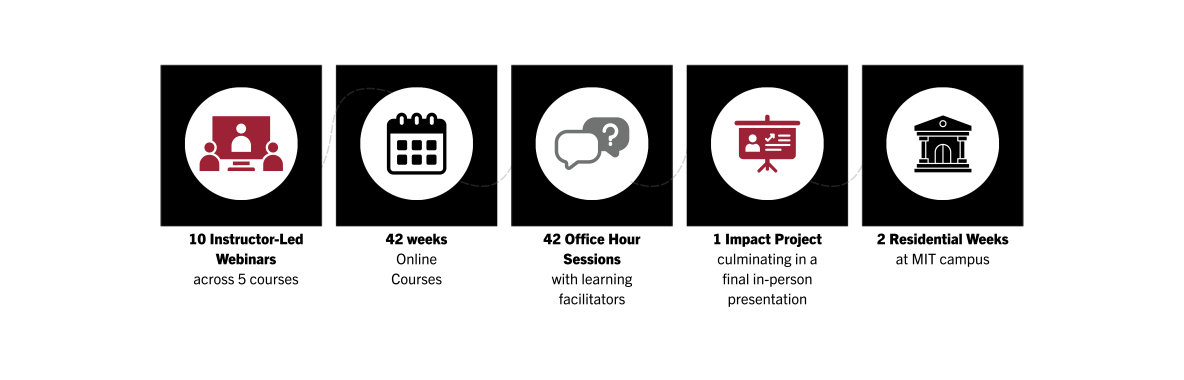
Join the Global Cohort During Two Residential Weeks
The experience includes:
- In-person masterclasses
- Lectures by guest speakers
- Networking opportunities with professionals from around the world
- MIT campus tours and visits to MIT labs
- CXO Spotlight session to share ideas and initiatives
- Impact Project group sessions leading to final presentations
- Certificate Award Ceremony held at the MIT campus
Who Is It For?
Leaders of technological departments or projects who need to understand the impact of modern technologies and be able to turn technological disruptions into competitive advantages for their organizations
Current and aspiring C-suite executives from Digital, IT, Marketing and Strategy organizations responsible for architecting enterprise-level ecosystems and driving innovation through strategic technology enablement
Senior consultants and entrepreneurs seeking to understand the role of technology in driving company growth and portfolio development
Senior executives overseeing strategic product management and spearheading innovation through technology-driven solutions and transformative strategies
Participants are required to have:
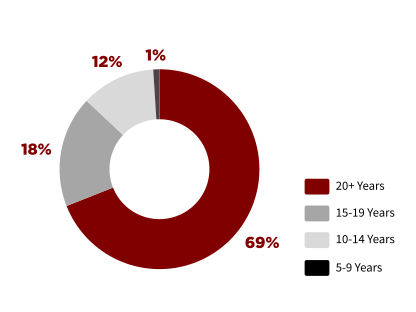
A minimum of ten years of experience
At least three years of experience managing projects related to technology, innovation, or business development
Past Participants Profile
Work Experience
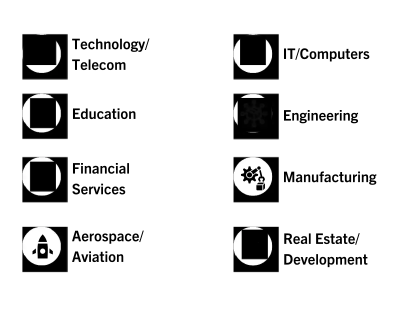
Top Industries
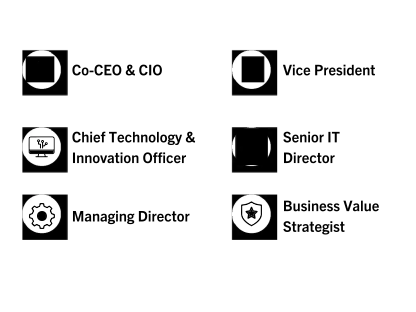
Top Titles
Top countries
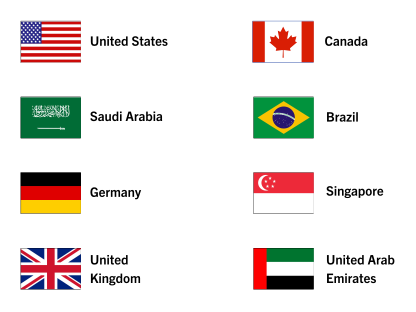
Where Past Participants Come From
















Disclaimer: All product and company names are trademarks or registered trademarks of their respective holders. Use of product and company names does not imply any affiliation with or endorsement by the holders. The list of companies is only indicative and not exhaustive.
Instructors

Dr. Abel Sanchez
Research Scientist, MIT

Dr. David Niño
Senior Lecturer, Daniel J. Riccio Graduate Engineering Leadership Program, MIT

Prof. John R. Williams
Professor, MIT Department of Civil and Environmental Engineering; Affiliated Faculty, MIT Center for Computational Science and Engineering.

Prof. Olivier De Weck
Professor of Aeronautics and Astronautics and Engineering Systems, MIT
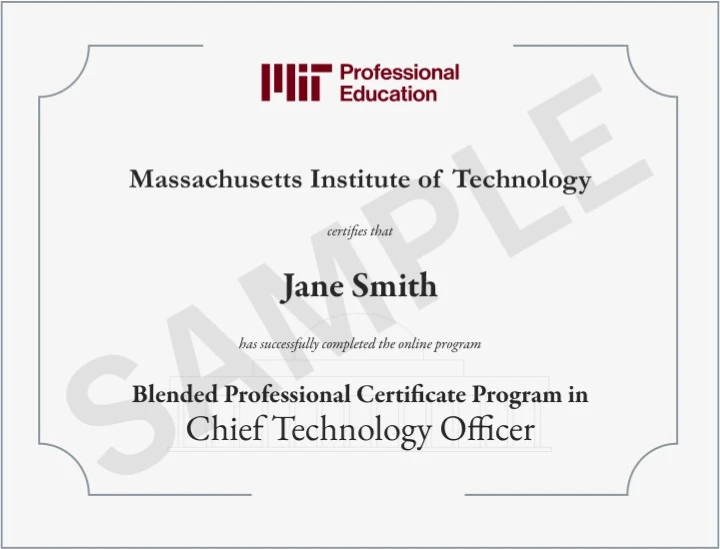
Certificate
All participants who successfully complete the program will receive an MIT Professional Education Certificate of Completion, as well as MIT Continuing Education Units (MIT CEUs).
To obtain MIT CEUs, complete the accreditation confirmation, which is available at the end of the program. MIT CEUs are calculated for each course based on the number of learning hours.
*The MIT Continuing Education Unit (MIT CEU) is defined as 10 contact hours of ongoing learning to indicate the amount of time a participant has devoted to a non-credit/non-degree professional development program.
To understand whether or not these MIT CEUs may be applied toward professional certification, licensing requirements, or other required training or continuing education hours, please consult your training department or licensing authority directly.
Benefits of Joining the Professional Alumni Community
Digital Professional Certificate and MIT CEUs*.
Exclusive announcements of new courses, programs, and events.
Exclusive access to the MIT Professional Education Alumni LinkedIn group, connecting you with a global network of fellow MIT Professional Education alumni.
15% benefit for online programs and short-duration, in-person programs offered by MIT Professional Education.
20% benefit for all DPP programs.
A one-year subscription to MIT Technology Review.
Access to the virtual campus for 2 years after program completion.
The opportunity to attend a Certificate Award Ceremony at MIT’s campus in Cambridge, Massachusetts, where participants will receive a physical Certificate.
Forwarding email address (@professional.mit.edu )
*Note: MIT CEUs are awarded upon successful completion of each course and the overall program, including completion of the required course and program surveys.
Participant Testimonials
Frequently Asked Questions
What is included in the fee?
The program fee includes teaching fees, access to online coursework and different activities that take place during the residential weeks.
The program fee does not include accommodations for the on-campus weeks, travel expenses (domestic, international, visa fees, and more), and other expenses not specifically mentioned in the fees.
What is included in the Residential weeks on the MIT campus?
During the Blended Professional Certificate journey, participants attend two on-campus residential weeks: one at the beginning and another at the end. These weeks involve masterclasses led by MIT instructors, campus tours, expert speaker sessions, networking events, and more. The second residential week concludes the experience by presenting the Impact Project and celebrating with a Certificate Award Ceremony.
Attendance at the Residential Weeks is mandatory for successful completion of the program. We strongly encourage participants to join us on campus to fully experience the learning environment, networking opportunities, and interactive sessions. While it is possible to attend online, please note that the level of participation and interaction may differ from the in-person experience.
What is the "Blended Methodology"?
The “Blended Methodology” combines online course content, live-online sessions, and two Residential Weeks. The online component includes course content, activities, and discussion forums available on the Virtual Campus. Live-online sessions include:
Live-online synchronous sessions with MIT instructors, with the number of sessions varying by course.
Weekly live-online synchronous Office Hours with learning facilitators, lasting 60 minutes per session and held on a set day and time.
Individual live-online synchronous Career Advising sessions with Impact Advisors during the program.
Instructor webinars and weekly Office Hours are recorded and accessible on the Virtual Campus. Individual Career Advising sessions are not recorded.
The program includes two mandatory Residential Weeks on the MIT campus. Participants who do not attend in person must attend online.
What does the Impact Project entail?
The Impact Project is a collaborative project that spans the entire duration of the certificate program. The aim of the project is to identify a problem, propose a solution, and employ the tools acquired through each course to demonstrate actionable methods to arrive at the end goal. In this way, this project ensures that participants have the opportunity to reflect on the covered topics, apply and link new knowledge from each program within the Blended Professional Certificate. The impact project culminates with a final pitch presented at the MIT campus during the second residential week.
What is the difference between instructors-led webinars and learning facilitator's office hours?
Instructor-led webinars and Learning Facilitator Office Hours serve different purposes. Instructor-led webinars are delivered by MIT instructors, with the number of sessions varying by course. Learning Facilitator Office Hours take place once a week on a set day and time, last 60 minutes, and provide an opportunity to review course modules and clarify questions. Instructor webinars and weekly Office Hours are recorded and made available on the Virtual Campus.
What is MIT Professional Education and its relationship with Global Alumni?
MIT Professional Education, directed by the School of Engineering at the Massachusetts Institute of Technology (MIT), offers short online programs for professionals worldwide through Professional Certificates. These programs, guided by MIT instructors, aim to provide high-quality online learning services.
To ensure program accessibility in different languages, MIT Professional Education collaborates with Global Alumni, a European-American EdTech organization specializing in online learning services from renowned universities worldwide. For more information, visit Global Alumni. You can also find official communications about our relationship with Global Alumni at MIT Professional Education - Who We Work With.
What is the weekly time commitment?
The time commitment varies by course but is typically around 8–10 hours per week. Participants should plan time to review module content, complete mandatory and optional assignments, and, if they choose, attend the weekly 60-minute Learning Facilitator Office Hour. Course-specific time estimates are included in each course outline.
Is the program eligible for a loan or financial aid?
This is a non-degree, non-credit program and is not classified as full-time or part-time education. Eligibility for loans or financial aid depends on the lender’s criteria. Participants are advised to confirm their eligibility directly with the loan provider before applying.
Is the program graded, and what are the requirements for receiving the certificate?
Participants receive a grade for each course in the program. To pass, participants must achieve a minimum grade of 80% in every course by completing the required assignments and discussion forums. Participants must pass all courses to receive the certificate. Throughout the program, they will also complete a collaborative Impact Project with their assigned group.
Are any taxes applicable to this program?
Applicable taxes will be calculated and added at checkout in accordance with country/state regulations.
Connect with a Program Advisor for a 1:1 Session
Schedule a call with one of our Program Advisors or call us at +1 857 847 5489.
Register now and boost your professional trajectory.
Enroll by